Using the UK’s Waterways to Move Wheat More Sustainably
22 July 2026
Background
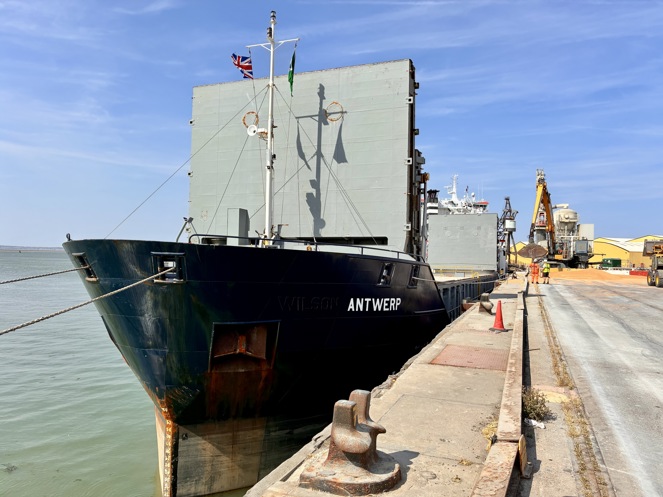
Peel Ports Group recently supported the movement of approximately 3,100 tonnes of wheat from its London Medway, Sheerness facility to Manchester, using the UK coastal shipping network and the Manchester Ship Canal as an alternative to traditional road transport.
The cargo was loaded at London Medway, Sheerness and transported by vessel for discharge in Manchester, demonstrating how Peel Ports Group can connect multiple locations across its own network to provide customers with an efficient, waterborne freight solution. The movement also highlighted the role coastal shipping can play in supporting more sustainable UK supply chains by reducing reliance on road haulage.
Challenge
Bulk commodity movements are often heavily reliant on road transport, particularly when cargo needs to move between port locations and inland destinations. For customers, this can create pressure around haulage availability, road congestion, cost, emissions and operational efficiency.
In this case, moving approximately 3,100 tonnes of wheat by road would have required a significant number of HGV journeys across the UK road network. Finding an alternative route was therefore important not only from an operational perspective, but also in terms of reducing road miles and supporting lower-carbon logistics.
The challenge was to move a large volume of bulk cargo efficiently from London Medway, Sheerness to Manchester while reducing reliance on road haulage and making best use of Peel Ports Group's integrated port infrastructure.
Results
Peel Ports Group provided a practical alternative by coordinating the movement of the wheat by vessel from London Medway, Sheerness to Manchester via the coastal shipping network and the Manchester Ship Canal. The shipment made use of Peel Ports Group's connected infrastructure, showing how cargo can move between locations within the same port network without defaulting to road transport.
The movement successfully transported approximately 3,100 tonnes of wheat by water and removed around 110 HGV journeys from the road network. This delivered a clear operational and sustainability benefit, reducing pressure on roads while demonstrating the effectiveness of coastal shipping for bulk cargo movements.
The shipment provides a strong example of how Peel Ports Group can help customers unlock more sustainable, scalable logistics options by combining port operations, coastal shipping and inland waterway access. It also reinforces the value of the Manchester Ship Canal as part of a wider multimodal freight solution.
By connecting London Medway, Sheerness and Manchester through waterborne freight, Peel Ports Group demonstrated the strength of its network and its ability to support customers seeking efficient alternatives to road haulage. The case also provides a clear proof point for the role ports can play in decarbonising supply chains and encouraging greater use of the UK's waterways.